
Osaka in 48 Hours: Canal Lights, Good Food and a Slower Second Day
Start with Osaka’s lively southern neighborhoods, then balance the bright lights with castle grounds and a riverside walk.
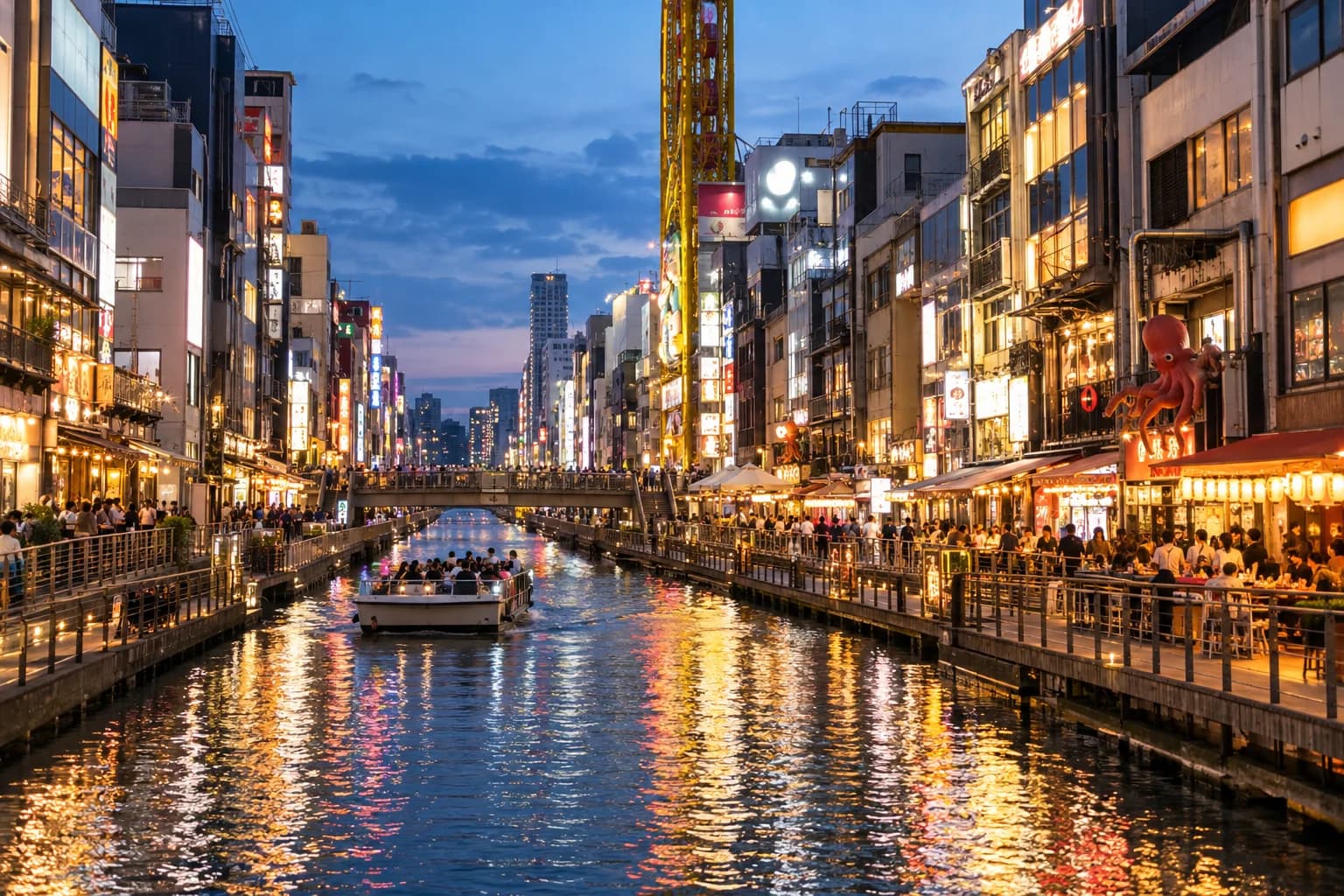
Osaka is a good place to give food a proper role in the itinerary. Leave room between meals, walk through a neighborhood instead of passing straight through it and let the evening take a little longer than expected. For a first visit, spend one day around the southern entertainment and shopping districts, then balance it with a second day of history and riverside space. There is no need to make every meal a famous restaurant or every hour a booked activity.
Day one: begin with Namba and a market lunch
Use Namba as your starting area, then make your way toward Kuromon Market when you are ready for something to eat. The market brings together fresh produce, seafood and places to stop for a bite. Browse before deciding, and choose a few things you actually want rather than treating the entire arcade as a tasting challenge.
Use the eat-in space offered by the vendor where available, ask where packaging should go and leave room for people shopping for ordinary groceries. Individual businesses keep their own hours, so check any specific shop you are planning the day around.
Further reading: Osaka Convention & Tourism Bureau: Kuromon Market guide, Japan National Tourism Organization: Kuromon Market.
Let Dotonbori be the evening’s main event
Save Dotonbori for the later part of the day, when the illuminated restaurant signs and canal reflections become part of the experience. The district is an established center for dining and entertainment, with the Tombori Riverwalk offering another way to see the waterfront.
Walk a little before committing to dinner. A menu you understand, a queue you are happy to join and somewhere comfortable to sit can matter more than a familiar name. If you want a particular restaurant, check its current booking arrangements; otherwise, allow yourself to choose when you get there.
Further reading: Osaka Convention & Tourism Bureau: Dotonbori visitor guide.
Day two: start with Osaka Castle and its surroundings
Make the castle area your morning anchor. The main keep and the surrounding grounds offer different kinds of visit: you can focus on the buildings and landscape, or plan time inside to learn more about the site. Decide which experience you want before buying tickets.
Use the entrance that makes sense for your arrival station rather than assuming every approach is equally close. Take a break after the castle visit before moving on. A substantial morning stop is enough; you do not need to attach a second major attraction simply because it appears nearby on a small map.
Further reading: Japan National Tourism Organization: Osaka Castle, Kintetsu Railway: Osaka Castle sightseeing guide.
Choose a quieter riverside afternoon
For a change from the previous evening, consider Nakanoshima. Its riverside park gives the second day a different texture: more room for walking and time to sit, rather than another circuit of bright signs. Check the weather and choose a short section that fits your energy.
If rain makes a long outdoor afternoon unappealing, replace the walk with one indoor attraction you genuinely want to see. Check that venue’s opening calendar and tickets before traveling there. Avoid collecting extra museums as backup plans you feel obliged to finish.
Further reading: Osaka Metro NiNE: Nakanoshima Park.
Build a food budget you can actually use
Decide which meal you want to make an occasion and leave the others simple. For example, keep lunch casual and make dinner the reservation, or enjoy a leisurely market lunch and choose an easy evening meal near your accommodation. Budget for drinks, small purchases and the journey home as well as the headline dish.
Read prices before ordering, and ask about ingredients or portions when you are uncertain. Travelers with dietary requirements should choose restaurants they can communicate with clearly rather than relying on the appearance of a dish. Keep the name and address of your accommodation saved before an evening out.
- Group nearby stops instead of crossing the city for every meal.
- Carry some cash alongside your preferred payment method.
- Check your final transport connection before the evening gets late.
- Leave space in the plan for a café or a second look at a neighborhood.
Two days in Osaka can be lively without being exhausting. Give the first evening to the canal and the second day a different pace, and you will leave with a broader impression than a list of food photographs alone.
Plan the route, then the data.
Compare Japan-ready eSIM plans by data and validity, then install before you leave home so maps and directions work from the first train.