
Tokyo in Three Days: A First-Timer’s Neighborhood Guide
Temple streets, a forest shrine and the energy of Shibuya: explore Tokyo one neighborhood at a time, with enough room to enjoy it.
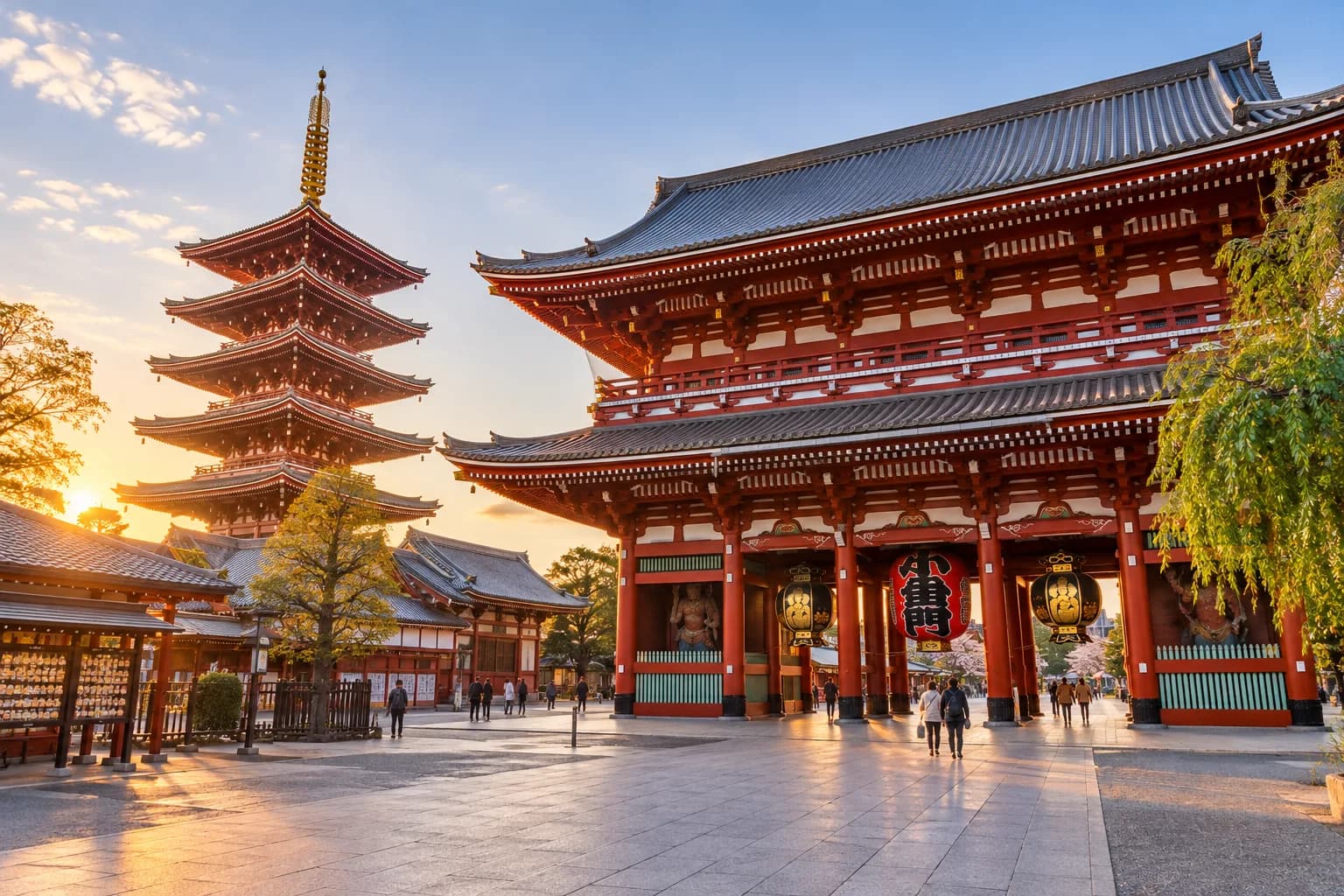
Tokyo becomes easier to enjoy when you stop treating it as one enormous sightseeing list. Give each day a small patch of the city, one place you really want to see and enough breathing room for a good lunch. This three-day plan starts with traditional streets in the east, moves to the forest and fashion districts in the west, and leaves the final day open to your interests. It is a suggested route, not a race between attractions.
Day one: Asakusa, then the riverside
Begin in Asakusa, where Senso-ji, the Kaminarimon gate and the Nakamise shopping street form an easy first introduction to the city. Walk the temple approach, then step aside to explore the surrounding streets. If you arrive early, expect some shops to open later; a quieter temple visit and a fully open shopping street are different experiences.
Afterward, head toward the Sumida River. This is a useful change of pace after the busy temple approach. Choose somewhere for lunch, sit down and let the first afternoon stay simple. Save an optional extra stop for a day when your feet and energy agree.
Further reading: GO TOKYO: Asakusa area guide.
Day two: a forest walk before Shibuya
Start around Harajuku with a walk into the wooded grounds of Meiji Jingu. Treat the shrine as a place of worship: keep voices low, leave room for other visitors and follow the signs about access and photography. The contrast between the trees and the surrounding city is part of the appeal.
Return to Harajuku for lunch and browsing, then continue toward Shibuya when you are ready for a busier afternoon. This is the day for shop windows, people-watching and the famous crossing. If a particular observation deck is essential to your trip, check its own ticket arrangements before you plan the evening around it.
Further reading: GO TOKYO: Meiji Shrine travel guide, GO TOKYO: How to see the best of Tokyo in three days.
Day three: choose culture or keep exploring
For a culture-focused day, make Ueno your anchor. Its park and cluster of museums let you choose one substantial visit without spending the afternoon moving across Tokyo. Check the individual museum’s opening calendar and exhibition tickets, then leave time for a walk or a café afterward. Ameyoko provides a livelier shopping contrast nearby.
If museums are not your priority, use the final day to return to the neighborhood you liked most. A second visit with no checklist can be more satisfying than adding another famous district. Keep this day especially light if you are also moving hotels or catching an onward train.
Further reading: GO TOKYO: Ueno area guide.
Getting around without turning the trip into a puzzle
A rechargeable transport IC card such as PASMO can simplify ordinary journeys: you tap at the gates rather than choose a new paper ticket for every ride. It is stored value, not unlimited travel, so check your balance. Choose a pass only after comparing it with your actual route.
For each trip, save the station name, line, direction and useful exit. Give yourself time inside unfamiliar stations instead of assuming that reaching the building means reaching the platform. Save your hotel address and a few essential screenshots before heading out; a working data connection is helpful for live directions, but it should not be the only place you keep the information.
Further reading: Tokyo Metro: Tickets and transport IC cards.
Make the route fit your trip
Choose accommodation by the journeys you expect to make, rather than by a famous neighborhood name alone. A station you can navigate comfortably matters more than an ambitious list of nearby attractions. On arrival day, plan dinner close to your hotel and leave the longest walks for later.
If the weather turns, swap an outdoor block for an indoor visit rather than adding both. If a queue consumes your lunch break, choose another meal. The purpose of a plan is to help you make small decisions quickly, not to make every change feel like a missed opportunity.
- Carry comfortable shoes, a compact rain layer and a charged phone.
- Save one must-see and one optional stop for each day.
- Check current venue information before booking anything time-specific.
Three days will not cover all of Tokyo. They can give you three distinct experiences of it, and enough familiarity to start finding your own way. Leave the city with a favorite street, a memorable meal and a reason to return.
Plan the route, then the data.
Compare Japan-ready eSIM plans by data and validity, then install before you leave home so maps and directions work from the first train.